The Challenge
A Deadline, Not a Choice
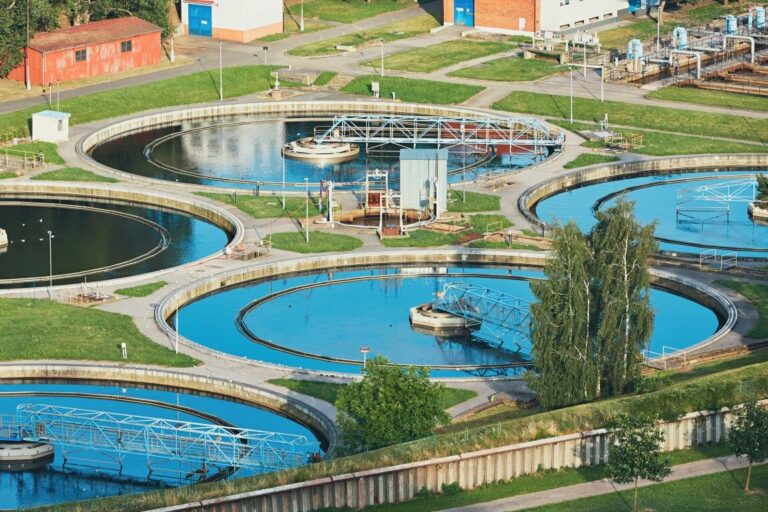
The City of Granbury’s South WWTP — last expanded in 2000 — hit a hard regulatory marker in 2016: three consecutive months operating above 75% of permitted capacity, which triggers TCEQ’s requirement to begin planning and engineering for additional capacity. The City was also reporting sanitary sewer overflows to TCEQ, and the plant discharges to Lake Granbury itself — a recreational reservoir where effluent quality is not negotiable.
The Site Was Capped — Legally
The obvious move — expand the South plant — was off the table. The South site sits next to the Harbor Lakes community, and the City holds a non-expansion agreement with the Harbor Lakes HOA that legally limits the site. That constraint is the defining feature of this project: it forced the City away from a conventional “pour more concrete” expansion and toward a two-part answer — and it is a constraint other Texas lake- and reservoir-front communities will recognize.
Why this matters for Texas plants. A growing utility that can’t expand its existing plant site — because of an HOA agreement, a floodplain, a property line, or an inter-local boundary — still has a path: rehabilitate the existing plant in place to a higher-performing process within the same footprint, and add satellite capacity elsewhere. Granbury ran both plays at once under one SRF-funded program.
The Solution
One Program, Two Plants
The City’s Phase 1 Wastewater Improvements Program — roughly $35 million total — bundled the rehabilitation of the existing 2.0 MGD South WWTP (this project), a new 1.0 MGD East satellite WWTP, and collection-system improvements. The entire program was financed by a Texas Water Development Board Clean Water State Revolving Fund loan of $34,950,000.
From Conventional Activated Sludge to BNR + MBR
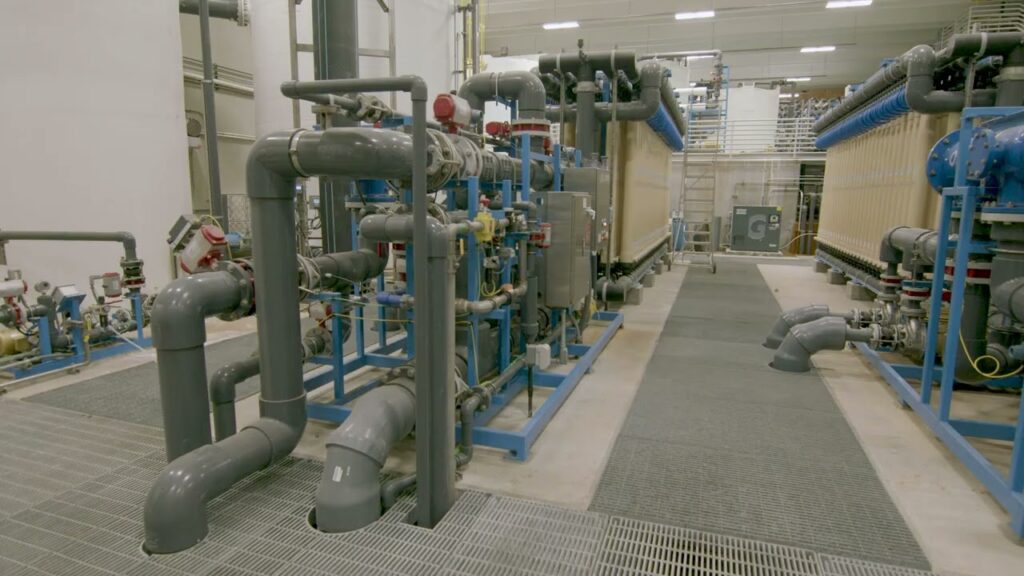
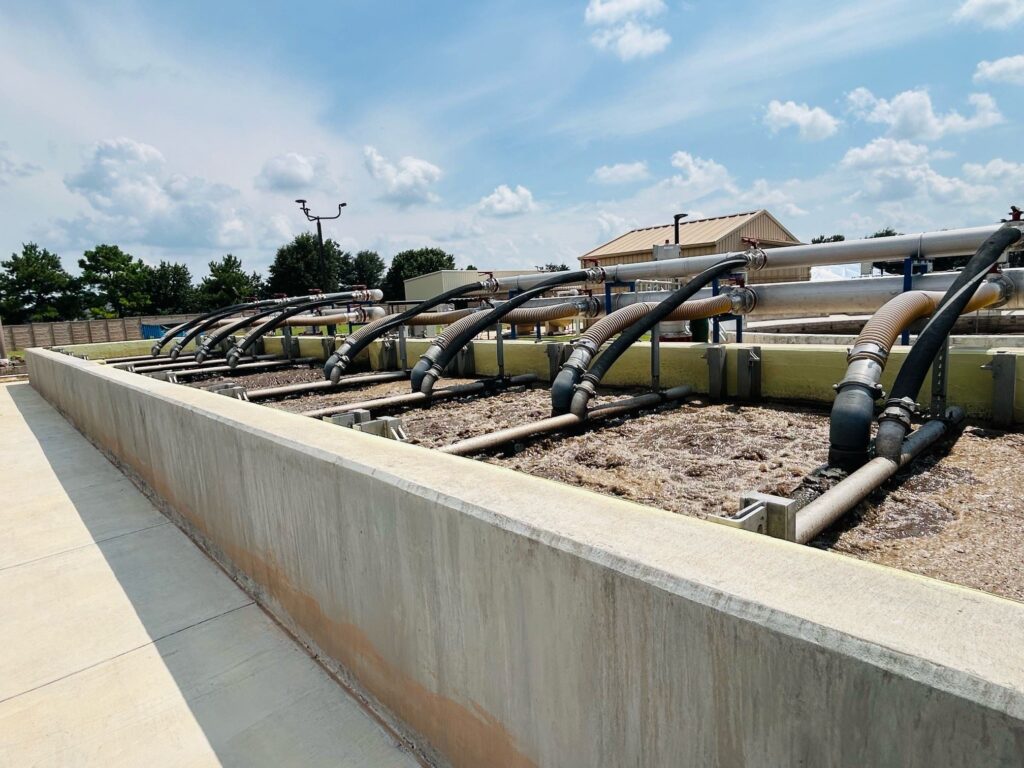
The South rehabilitation converted an existing conventional activated-sludge plant to a biological nutrient removal (BNR) process with a membrane bioreactor (MBR) and UV disinfection, producing TCEQ Type I effluent — the state’s highest-quality reuse grade. The membrane bioreactor matters here for a specific reason: it delivers reuse-grade effluent within the existing footprint, which is exactly what a capped site requires.
Equipment — Headworks Through Disinfection
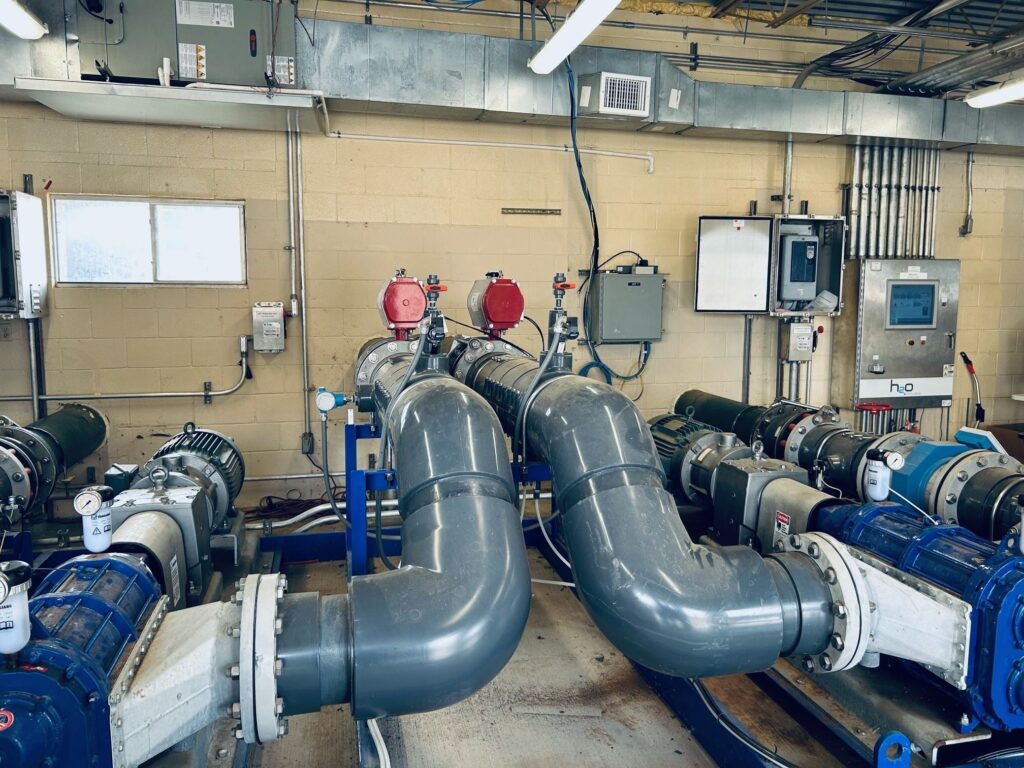
Vision Equipment supplied the South plant’s equipment train across the full process:
| Process step | Equipment | Manufacturer |
|---|---|---|
| Coarse screening | Headworks screens | Duperon |
| Fine screening | Mechanical fine screens | Cleantek |
| Grit removal | Tray degritting | Envirodyne Systems Inc. |
| Aeration | Retrievable strip diffusers | Jaeger Aeration |
| Biological treatment | flexMBR membrane bioreactor | H2O Innovation |
| Disinfection | UV | NeoTec |
The flexMBR “Open-Source” Membrane Platform
H2O Innovation’s flexMBR is what the company calls a universal, open-source membrane system: it runs membrane modules from different suppliers, and lets an owner swap membranes over the life of the plant without redesigning the plant around a single proprietary module. That is the mechanism behind H2O’s “Flex” lifecycle-cost approach — the owner keeps the ability to compete membrane suppliers for decades, instead of being locked to whatever was installed on day one.
The Results
Online 2023, Within the Footprint
The rehabilitated South WWTP came online in 2023, delivering BNR + MBR + UV treatment and TCEQ Type I reuse-grade effluent within the original capped site. The City met its TCEQ 75%-rule obligation without acquiring land or breaking the Harbor Lakes non-expansion agreement.
A Reuse Outcome That Was Already Working
Type I effluent from the Granbury system has irrigated the Harbor Lakes Golf Course since 2011 — roughly 1 MGD of reclaimed water — with the remainder returning to Lake Granbury. The rehabilitation did not invent the reuse program; it secured it, locking in the effluent quality that makes the golf-course reuse and the lake discharge defensible for the next plant generation.
Implications for Texas Plants
Three replicable takeaways:
- A capped site is not a dead end. When an HOA agreement, floodplain, or boundary blocks expansion, an in-place process upgrade — conventional activated sludge to BNR + MBR — can raise performance and secure reuse-grade effluent without enlarging the footprint.
- Pair an in-place upgrade with a satellite plant. Granbury funded both the South rehabilitation and a new East satellite plant under one SRF program — capturing shared engineering, permitting, and financing instead of running two disconnected capital events.
- The TCEQ 75% rule is a planning trigger, not a surprise. Granbury’s clock started in 2016; the program was financed and underway years before a hard violation. Utilities approaching 75% of permitted capacity should treat it as the start of a fundable program.